Big Helmets: Heroes of Destiny
- 4.6
- Rating
- 1.00M
- Installs
- Free
- Price
 Analysis by App-foxy
I spent time with Big Helmets: Heroes of Destiny as a quick-action game that can work surprisingly well on a shared phone or tablet, provided everyone using the device understands what carries over between sessions. It is a free action game from BoomBit Games, built around roguelike role-playing, player-versus-player battles, dungeons, heroic encounters, and tactical decisions. That combination gives it more variety than a straightforward arena game, but it also means the experience is easier to enjoy when players agree on how progress and purchases will be handled.
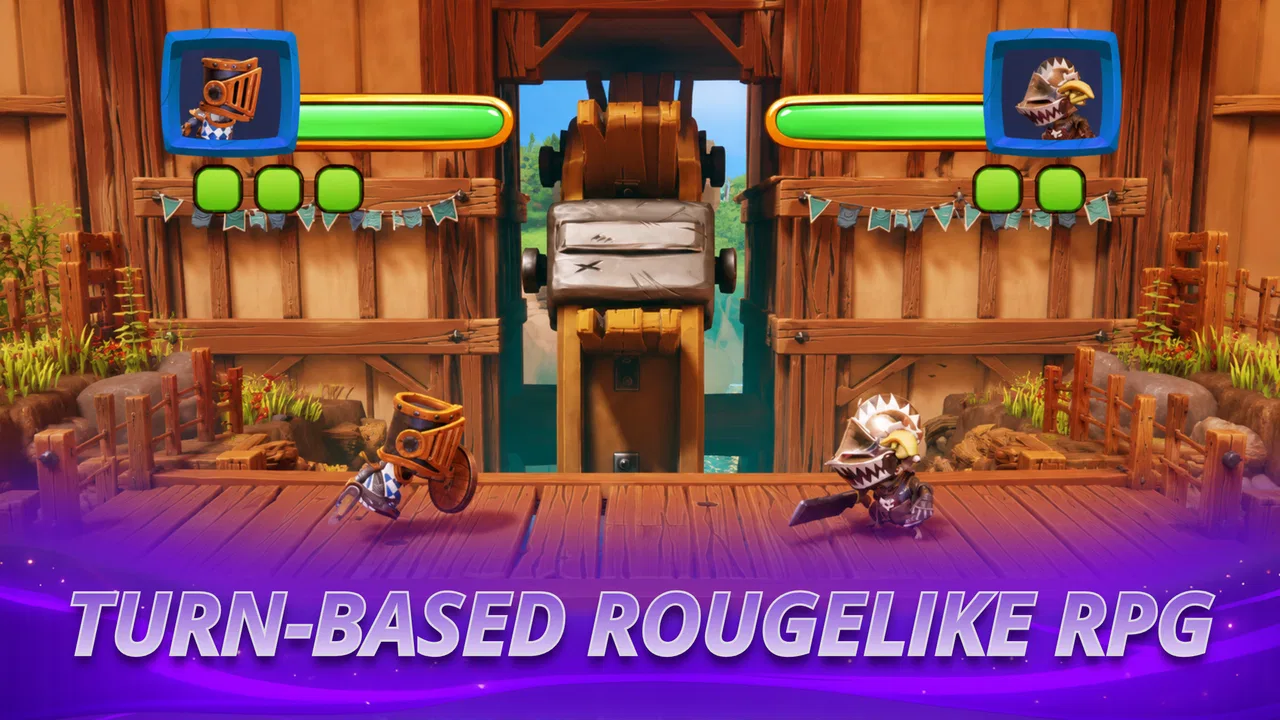
The basic appeal is easy to understand. You enter dangerous encounters, make choices about how to develop a hero, and try to survive long enough to improve your position. The game has a playful visual identity suggested by its short store description, “Big Helmets,” yet the action is not entirely mindless. I found myself thinking about whether a safer choice would help me reach the next stage or whether taking a risk might produce a better run. That push and pull is the heart of the experience.
How Big Helmets fits a shared household device
A shared device changes the way I judge a game. On my own phone, I can pick it up whenever I want and make decisions without explaining them. On a family tablet, a partner’s phone, or a device passed between siblings, every session becomes part of a larger routine. One person may prefer dungeons, another may want PvP, and someone else may simply enjoy experimenting with heroes. Big Helmets can accommodate those different interests, but it is not the kind of game I would hand to several people without first agreeing on who is responsible for the active game progress.
You May Also Like

 Blood Strike: 2.5 Anniversary
Blood Strike’s Loadouts Turn Every Drop Into a Tactical Gamble
A close look at Blood Strike’s custom loadouts: how fast access to signature weapons reshapes its battle royale rhythm, rewards preparation, and narrows the gap between fights.

 Pandora - Music & Podcasts
Pandora’s Music Is Easy to Start, but Harder to Recover
Pandora’s strength is its low-effort path from a seed to a station. Its weak spot is how much confidence it asks you to place in connection, setup, and quiet recovery.

 8 Ball Pool
 Is Built on Rivalries, Rematches, and Routine
A close look at the rivalries, rematches, shared routines, and unanswered safety questions that turn a quick pool match into a persistent mobile community.

 Samsung Music
’s Quiet Strength Is Playing What You Already Own
Its reach comes less from spectacle than from dependable access to a personal library. That simplicity is both the app’s strongest retention engine and its ceiling.

 AccuWeather: Weather Radar
AccuWeather Review: A Quick, Clear Forecast for Everyday Decisions
For everyday plans, the best forecast is the one you can understand quickly. AccuWeather makes rain timing, radar, and local conditions easy to act on, with a few trade-offs.

 Hill Climb Racing
Why Hill Climb Racing Still Turns Crashes Into One More Run
A tiny car, a bumpy hill and one more upgrade: Hill Climb Racing keeps resurfacing because its simple chaos makes every near-miss feel personal.
More From Our News Desk
View All News


That matters because roguelike games are built around repeated attempts rather than one uninterrupted campaign. A player may be comfortable losing a run to learn from it, while another may see the same loss as wasted progress. When the device is shared, I recommend treating each session as a deliberate turn: finish a meaningful encounter, make sure the next person knows what mode is open, and avoid starting a new run if someone else is expecting to continue the current one.
In an everyday situation, this could work well during a short break at home. One person plays a dungeon run before dinner, another tries a PvP match later, and a third checks the hero setup without changing anything important. The game’s mix of modes makes that handoff more interesting than passing around a single-mode arcade title. The trade-off is that the household needs a little more coordination, because different activities may demand different levels of attention and commitment.
I also found that the game is better suited to players who enjoy making decisions than to someone looking for a purely passive time filler. Even when the controls feel approachable, the long-term question is what to prioritize. Do you focus on getting through the next encounter, test a risky approach, or prepare for competition against another player? That choice gives each person room to play differently, but it can also create disagreements when several people share the same active profile.
What to settle before the first session
The first practical boundary is ownership of progress. If one person is the main player, I would let that person make the important development decisions and allow others to observe or play only when invited. If the device belongs to the household, a simple verbal rule is useful: do not spend resources, alter a hero setup, or enter a competitive match without asking the person who normally manages the game.
This is especially important because free games with optional purchases can feel harmless until a player taps through a purchase prompt too quickly. Big Helmets is free to download and play, while its optional items range from $0.99 to $199.99 each. That is a wide enough range that I would treat purchase approval as a household rule, not as something to leave to chance. A shared device should have a clear agreement about whether purchases are allowed, who approves them, and whether the game is played without spending.
I would also decide whether younger players may use the same active game space. The content rating is Teen, so I would not assume that it is automatically appropriate for every child in the home. The action, competitive play, and role-playing progression may be fine for some teenagers, but parents should make the final call based on the child’s maturity and comfort with competition. A shared tablet in a living room is not the same as an unsupervised personal device, and the surrounding context matters.
Another useful boundary is time. Roguelike attempts encourage “one more run,” while PvP can make a player want to immediately recover from a loss. On a shared device, that can quietly turn a short turn into a long session. I found it more manageable to stop after a completed encounter or a clearly finished match rather than quitting in the middle of a decision. That makes it easier for the next person to understand what happened and reduces the chance of accidental changes.
Why coordination matters more than it first appears
The different parts of Big Helmets do not ask for exactly the same mindset. Dungeons reward patience and adaptation, while PvP adds the pressure of facing another player’s decisions. Heroic fights can feel like milestone challenges, and the broader role-playing layer gives choices a longer shadow than a single battle. When several people use the same device, I would keep the roles simple: one person can focus on progression, another can explore combat options, and spectators can suggest ideas without taking control.
That arrangement turns the game into a small cooperative viewing experience even when the game itself is not designed as a household co-op session. Someone watching can point out a safer route or question a risky choice, but the active player still owns the final decision. I like this approach because it preserves the fun of discussing strategy without creating resentment over a failed run.
A particularly useful habit is to say out loud what the current goal is before playing. “I am testing this build,” “I am trying to clear the dungeon,” or “I am only doing one PvP match” gives the next person context. It also prevents a common shared-device problem: one player assumes the other is simply continuing routine progress, then discovers that the session was being used for experimentation.
I would not recommend switching players during a tense encounter. The game’s action may be accessible, but the person taking over will not necessarily understand the choices already made. A better handoff happens between activities, when the current run or match has ended. This is one of the less obvious strengths of the game in a household setting: its variety creates natural stopping points, as long as players use them intentionally.
For competitive play, expectations should be even clearer. A loss can feel personal when the person playing is young or still learning, and spectators can make that worse by turning every match into a judgment. I prefer treating PvP as practice rather than a household ranking system. If one player is much more experienced, advice should be offered only when wanted. Otherwise, the mode can become stressful instead of entertaining.
Age, trust, and the free-to-play question
The Teen rating is the most important age-related detail to keep in mind. I would be comfortable recommending Big Helmets to a teenager who already understands that free-to-play games may present optional purchases and who can handle losing competitive matches without becoming overly frustrated. I would be more cautious with a younger child, not because the game cannot be enjoyable, but because the combination of action, PvP, progression, and purchase prompts deserves adult judgment.
Trust is more useful here than pretending a shared device removes every risk. A teenager may be perfectly capable of playing independently, yet still benefit from knowing the household’s spending rule. If the game is being used by several people, I would make the rule visible and uncomplicated: ask before buying anything, do not use someone else’s turn, and stop when the agreed session ends. Those expectations are more practical than relying on everyone to remember which decisions belong to which player.
The purchase range also changes who should skip the game. If you want a completely distraction-free experience with no optional spending to consider, this is not my first recommendation. A paid game with a fixed upfront cost may be easier for some households to manage, even if it offers fewer modes. Big Helmets is a better fit for players who are comfortable enjoying the free portion and treating purchases as unnecessary extras rather than as a normal part of progression.
I also would not choose it for someone who dislikes repetition. The roguelike structure depends on trying again, learning from failure, and adjusting decisions. That can be satisfying when improvement is the goal, but it can feel circular if you want a linear story or a predictable sequence of levels. Likewise, a player who only wants relaxed solo action may find PvP and the broader progression layer more demanding than expected.
On the other hand, the game is a strong match for a teenager who likes switching between activities without installing several unrelated titles. The same app provides dungeon exploration, hero-focused development, competitive battles, and tactical choices. That concentration is convenient on a shared device, where storage and attention are limited. It also gives family members different ways to enjoy the game without needing to agree on one exact play style.
Where it stands beside familiar action games
Compared with a simple arcade action game, Big Helmets asks more from the player between encounters. You are not only reacting to what appears on screen; you are also thinking about how a run is developing and what kind of hero you want to build. That added layer makes it more rewarding for me, but it removes some of the instant simplicity that makes arcade games ideal for very young players or extremely short sessions.
Compared with a traditional role-playing game, it feels more suitable for repeated, bite-sized attempts than for settling into a long narrative. I would choose a conventional RPG when I want a carefully paced story, extensive exploration, or a stronger sense of a fixed journey. I would choose Big Helmets when I want to test decisions, recover from a failed attempt, and move between solo challenges and PvP without changing apps.
Against a dedicated competitive arena game, its advantage is variety. PvP is part of the experience rather than the entire identity, so a disappointing match does not have to define the evening. Its disadvantage is that players looking for highly focused competitive depth may prefer a game built exclusively around online battles. Here, the broader roguelike and dungeon structure can be a benefit or a distraction depending on what you came for.
One practical comparison is control over the household atmosphere. A purely solo action title is easier to pass between people because one player’s choices usually do not affect anyone else’s plan. Big Helmets creates more conversation, which can be enjoyable, but it also makes boundaries more important. I would pick it for a household that likes discussing tactics, not for one where every failed attempt turns into an argument.
Performance expectations and version context
The game supports devices running Android 8.0 or later, which makes it accessible to many older Android phones and tablets. That does not mean every supported device will feel equally comfortable, especially when a shared tablet has limited storage, a crowded background, or a screen that makes action less convenient. I would install it on the device used most often and test the experience there before deciding whether it should become the household game.
The current version is 1.3.2, so I would check that the device is running the available update before judging the experience. Keeping the same version across devices is particularly sensible when more than one person in the household plays, because differences in updates can make menus, balance, or available content feel inconsistent. I would also avoid changing devices in the middle of an important progression plan unless the account and progress arrangements are already understood.
Because the game combines action with longer-term development, comfort matters. A small phone may be fine for a quick session, while a tablet can make shared viewing and tactical discussion easier. The larger screen is not automatically better for every player, though; someone who prefers private, focused sessions may find a personal phone less distracting. My recommendation is to match the device to the player rather than assuming the shared family screen is always the best option.
There is also a difference between playing alone and playing while others watch. When I play privately, I can experiment without pressure. In a household setting, spectators may push for the safest decision, even though the player is trying to learn through risk. I would preserve some solo time for experimentation and use shared sessions for discussion, dungeons, or clearly defined challenges. That division makes the game feel less like a test and more like a flexible activity.
Who should install it, and who should pass
I recommend Big Helmets to players who enjoy action with a decision-making layer, repeated attempts, and a choice between solo challenges and PvP. It is especially appealing if you want one free game that can support different moods: focused dungeon play, a competitive match, or a short experiment with hero development. Its average rating is 4.6 from around 56K ratings, and it has passed one million installs, which fits the impression of a game with broad casual appeal rather than a tiny specialist project.
I would suggest it for a teenager who can manage optional purchases responsibly, a group of friends who enjoy comparing strategies, or a household that is willing to set simple rules for a shared device. The developer, BoomBit Games, has placed enough different activities in the same package that the game can remain interesting after the novelty of the first battles fades. The key is accepting that improvement comes through repetition rather than expecting every session to deliver a clean victory.
I would skip it if you want a fully linear adventure, a purely solo experience, or a game with no purchase decisions at all. I would also look elsewhere if your main goal is a deeply specialized PvP title or a quiet game for a very young child. Big Helmets sits between those categories: more strategic than a basic action game, less narrative-driven than a traditional RPG, and broader but less focused than a dedicated competitive title.
My final advice is to begin with a no-spending household rule, give the main player control over progression, and use completed encounters as handoff points. Those three habits address the biggest sources of friction without taking away the fun. They also make the game easier to evaluate honestly, because you can see whether the combat and roguelike decisions are enjoyable on their own rather than confusing entertainment with purchases.
Overall, I found Big Helmets: Heroes of Destiny most convincing as a flexible action RPG for players who like learning through repeated runs and switching between dungeons and PvP. Its free entry point is inviting, but the Teen rating, optional purchase range, and shared-device concerns mean it deserves a little adult attention in a household. Its best feature is the way different modes support different kinds of sessions; its biggest weakness is that those same choices can make progress and expectations messy when several people use one account. With clear boundaries, I would happily recommend giving it a try.
FAQs for Big Helmets: Heroes of Destiny
01What is Big Helmets: Heroes of Destiny?
Big Helmets: Heroes of Destiny is a fantasy action game focused on collecting and upgrading heroic characters, battling enemies, and progressing through a series of challenging encounters. Its appeal comes from colorful visuals, quick combat, character development, and equipment improvements. Before downloading, players should expect a progression-based experience where building a stronger team and learning each hero’s abilities are important for overcoming tougher stages.
02How does the gameplay work in Big Helmets: Heroes of Destiny?
The game combines straightforward battles with strategic decision-making. Players typically choose heroes, improve their abilities, equip better items, and use their team effectively against different opponents. Although the controls are designed to be accessible, success is not only about tapping quickly; understanding character strengths, timing attacks or abilities, and preparing for more difficult encounters can make a significant difference as the adventure progresses.
03Is Big Helmets: Heroes of Destiny free to download and play?
Big Helmets: Heroes of Destiny can generally be downloaded without an upfront purchase, but free-to-play games may include optional in-app purchases. These purchases can help players obtain resources, upgrades, or other useful items more quickly. The game can still be enjoyed without spending money, although progress may require additional time and patience. Check the store listing on your device for current pricing and purchase details.
04Does the game require an internet connection?
An internet connection may be needed for certain features, such as account synchronization, advertisements, events, updates, rewards, or purchases. Some portions of the game might work when the device is offline, but this can vary depending on the version and platform. For the most reliable experience, it is best to launch the game while connected to Wi-Fi or mobile data and allow updates to finish.
05Is Big Helmets: Heroes of Destiny suitable for all players?
The game is a good choice for players who enjoy light fantasy combat, collectible heroes, upgrades, and gradual progression. Its presentation is generally approachable, but younger users should be aware that optional purchases may be available. The exact age rating, advertising policy, permissions, and content classification can differ between Android and iOS, so parents should review the official store information before allowing children to download it.
Pros
- Simple controls make it easy to start playing immediately.
- Short battles fit well into quick gaming sessions.
- Hero progression gives a clear sense of long-term improvement.
- Distinct character abilities add variety to team-building choices.
- The fantasy presentation is colorful and approachable for casual players.
Cons
- Progress can feel repetitive once the early stages are completed.
- Some upgrades may require considerable grinding to obtain.
- The interface can feel crowded during combat and menu navigation.
- Limited strategic depth may disappoint experienced RPG players.
- Performance and loading times may vary across older devices.

Big Helmets: Heroes of Destiny
Gallery